

All that I have been reading and viewing on social media for the past few weeks has been about ‘sustainable fashion’. Articles on how to get a ‘sustainable’ wardrobe, and not fall for fast fashion trends, have been ubiquitous in my social media feeds. The presence pushed my intrigue to go above saturation, and made me question the uprising against quick changing ‘fashion’ trend. People usually talk about how ‘evil’ fast fashion is, and how they opted for sustainability in their clothing, beauty and lifestyle products, but no one addresses why. So here I am, trying to figure out why fast fashion is exhibited as pure evil.
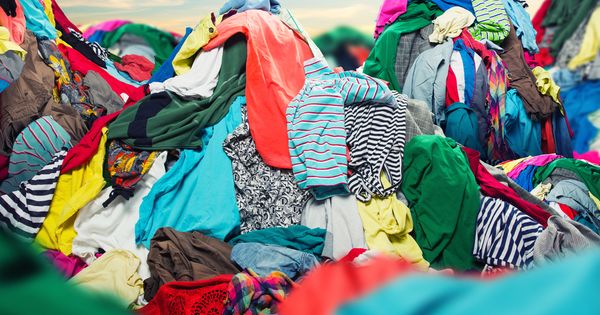
The fundamental issues, according to this famous Quora post, are: 1) It affects the environment 2) Labourers earn bare minimum wage 3) People don’t value the product as much, and throw it out in an average span of 35 days 4) Developing countries that produce these clothes have scarce resources, such as water.
Questioning the Trend
I agree that these are genuine issues, though my question is why fast fashion taking all the blame? Of course, the sheer volume generated by fast fashion waste is huge (huge is an understatement), but isn’t the fashion industry as such to blame? A quick search for ‘sustainable fashion brands’ leads to pages listed with brands that claim to sell ‘ethically sourced clothes from the same factories that produce your favourite brands’. Doesn’t that imply that the toxic chemicals used to dye the material is the same? And that at the end of the day, aren’t countries like India and Bangladesh that export most of the clothes getting affected anyway?
The number of fashion bloggers/fashion stylists accounts on all social media has been on a steady upward curve. The reason why this is a successful venture is because of the number of people who want to be on trend, and on fleek, ALWAYS. Somehow, this necessity to be on trend didn’t rise stochastically. The fashion industry churns these trends. Remember ‘The Devil Wears Prada’ scene where Miranda Priestly schools Andrea about how the lumpy sweater she’s wearing is but a consequence of what she (Miranda) chose to put up as a trend? How she made all the important decisions in fashion? Indeed, this is not a lesson just for her. Trends have always existed- it was originally from movies and pop culture, and shifted to brands creating their own trends today. And like Miranda rightly says, even lumpy blue sweaters aren’t free from the waves of change due to trends.

The real issues with clothing industries are as mentioned in the multiple anti-fast fashion articles- poly blend materials replacing cotton, chemical dyes seeping into water sources, large areas of landfills filled with cloth that isn’t decomposing any time soon, water scarcity, poor labour economic situation and lack of woman empowerment. But take a step back, and look at the bigger picture, will you? This issue isn’t restricted to just fast fashion. In fact, it is much more widespread than it seems.
The Disconnect between the Artist and his Art
Previous articles on high-fashion brands not crediting its craftsmen has surfaced many times. Brands including Gucci, Chanel and Alexander McQueen do not give sufficient credit- artistically or financially. There is a large disconnect between the creator of the garment and the customer, ripping apart the seams of viewing fashion as an art. This, I feel is one of the principle issues here. Be it sustainable or fast, the industry has through time, alienated the craftsmen from their craft. Selling a piece of cloth at a price of 200$ at a high-fashion boutique, but a cloth that originated in a small workshop in India which took the craftsman 3 months to make isn’t a good picture to paint at all.

Environmental Effects
Indian mills rose to fame with revolutions and wars requiring more cloth. Before the industrialisation and the colonisation of India, it was thriving in cultural textile craftsmanship. Any Indian worth their salt will talk highly of Kanchiwaram silk sarees, intricate Zardozi work, the beautiful Chikan embroidery, soft Dhaka muslins and glowing Benarasi silks (amongst the multitude of other works of art). We used vegetable and plant based dyes, which last much longer than the lead-based dyes used today. Leading designers have started programs through which the poor state of the artistry involved in textile is rescued through their work. More on this particular case can be read here. Such is the state of Indian textile, where women prefer to buy cheap synthetic sarees due to bastardization of textile by the West. India shifted to a primarily export based cotton industry, which generates a huge proportion of its GDP, and has a huge sect of its population employed in the same. The amount of water resources used in such textile mills are humungous. The requirement for dying and washing, amongst other processes takes up large volumes of water for a single production cycle. Used water isn’t treated before release very often, since the enforcement of standards are lacklustre. This effluent possibly contains lead, which is extremely carcinogenic and can lead to deformities in children. Salts and azodyes can leach into the soil, affecting the plant growth and subsequently affect animals that feed on them. Slowly, these chemicals make their way into the environment, wreaking havoc wherever they traverse.

At the end of the day, the fashion industry indeed has labourers working at minimum wages, polluting water supplies and using non-degrading material anyway. The factor that puts fast fashion from the frying pan to the fire is its sheer volume, rather than its core functioning.
Environment pollution has been talked about in a great number of occasions, though much less action has been taken. There have been multiple solutions provided to landfills, water contamination, alternate dyes, etc. but they have been rarely implemented. Any one questioning these practices? I don’t see trending hashtags to why administrations and governments aren’t doing much about the increasing landfills around the world. I just see #sustainablefashion, debates that have tweet threads going on for pages, and people blindly supporting the trend. People want to debate and argue, trying to figure out who’s right and who’s wrong. That isn’t the necessity today, as we’re running out of time. At the rate at which we are consuming resources and piling up the landfills, a major disaster is on its way. The fashion industry isn’t the only culprit of course- almost every other industry has a humungous carbon and water footprint, always shadowing behind the ‘trending’ ones.
Possible Solutions to this dilemma
Scientists and engineers throughout the world are trying to figure out ways to renew water resources and effectively treat effluents. Researchers are trying to engineer bacteria that can breakdown complex material to avoid landfills that tower to great heights. The real acceleration we require is bringing these solutions to a larger scale and implementing them. Implementing at a small scale is no problem at all, because in general, farmers and working populations always welcome such positive changes. Implementing at a larger scale seems problematic, because such policies are balanced on thin webs of politics, power play and money.
A movement against fast fashion is indeed a step towards a better approach towards fashion, but we need to stop narrowing our views. Look at the volcano, rather than just scream at the smoke. There are bigger things that we need to be talking about, questions we need to ask and try to understand what is going on in the background. Instead of blindly following trends, let’s ask why. Let’s find answers to questions unanswered and let’s try and make the world a better place to live in.
Ananya.N.S ©
Read more: A Thirsty Industry, The Environmental Costs of Creating Clothes
Featured image: source

 Ananya Nidamangala Srinivasa
